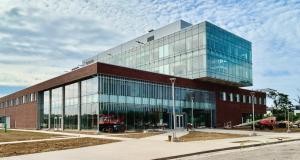
The University of Louisville’s Speed School Student Success Building, opened September 4, 2025 unites academic advising, maker spaces, labs and collaboration zones under one 115,000-square-foot roof. Every design decision—from massing strategy to material selection—was filtered through user wellness, energy performance and long-term adaptability.
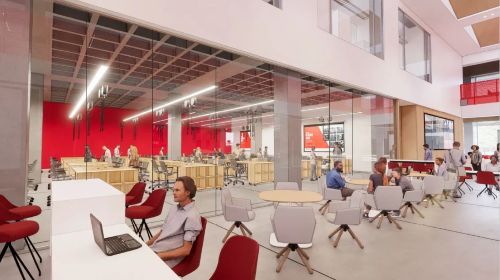
Key design features include:
- Net Zero–ready, powered by geothermal systems.
- Optimized daylight, acoustics and cognitive performance through evidence-based design.
- Wellness-centered finishes that reduce operational strain and maintenance cycles.
- Integrated architectural and systems thinking from day one.
As institutions reshape their approach to STEM education, the architecture that supports it must evolve with equal ambition. At the University of Louisville, the new Student Success Building for the J.B. Speed School of Engineering is a purpose-built response to that challenge by combining design precision, technical collaboration and long-term adaptability to meet the demands of tomorrow’s engineering workforce.
Brought to life by Luckett & Farley in partnership with SmithGroup, the 115,000-square-foot facility brings together academic advising, maker spaces, engineering labs, and collaboration zones under one high-performing roof. Its integrated design framework reflects not only a programmatic shift toward interdisciplinary learning, but also a rethinking of how architecture can elevate student experience, strengthen institutional resilience, and drive measurable economic impact. By preparing students with the skills and environments they need to succeed in the workforce, the facility serves as both an academic hub and a catalyst for regional growth.
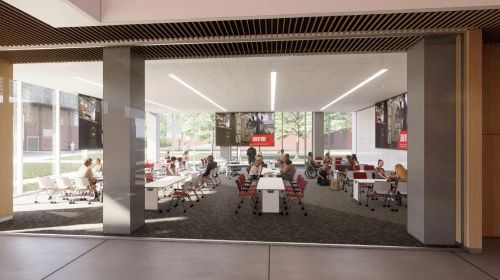
From massing strategy to material selection, every design decision was filtered through the lens of user wellness, energy performance and spatial flexibility. The building is Net Zero–ready and powered by geothermal systems, an infrastructure decision that required early coordination between design and engineering teams to ensure energy targets were both achievable and scalable. Interior environments are optimized for daylight, acoustics, and cognitive performance with wellness-centered finishes that reduce operational strain and improve long-term maintenance cycles.
For Luckett & Farley, the project reflects a commitment to designing spaces that serve students first through environments that are adaptable, high-performing, and responsive to how learning happens today. Sustainability is integrated as a natural part of that approach, ensuring the facility performs efficiently while supporting student success. “This wasn’t about creating a statement piece,” said Aric Andrew, the project’s lead architect and director of Luckett & Farley’s Higher Education Studio. “It was about crafting an ecosystem that supports how students learn, collaborate, and grow, both now and in the future.”
The firm’s long-standing relationship with the University of Louisville provided the foundation for trust and experimentation. With the Student Success Building, however, the project demanded more than familiarity. It required a higher level of integration across disciplines, with architectural and systems thinking working in lockstep.
More than a new campus facility, this project stands as a case study in how architecture can translate educational vision into enduring form, through deliberate design, collaborative execution, and a deep understanding of institutional goals.
About Luckett & Farley
Founded in 1853, Luckett & Farley is the longest continually operating architectural design firm in the United States. With a legacy of innovation spanning more than 170 years, the firm continues to push the boundaries of design across Corporate, Civic, Higher Education, Distilled Spirits and Industrial sectors. The employee-owned company partners with some of the world’s most respected brands and institutions to design environments that inspire, transform and endure. For more information, visit luckett-farley.com.
###